Writing
Briefings on EHS data architecture, product strategy, and applied analytics.

Apr 2026
2026 EHS Tech Consensus: Interrogating the Vendor AI Data
97% claim AI adoption. 5% have it embedded. 85% still rely on manual tools. What the 2026 EHS vendor surveys reveal when you read past the headline.
Read →
Apr 2026
The Digital Error Trap: How Interface Risk Becomes Systemic Failure
Digital error traps don't stay in individual records. They corrupt the data safety leadership uses to set priorities. What they are, how they operate, and what to do about them.
Read →
Apr 2026
Validating Leading Indicators: Auditing EHS Data for Predictive Signal
Most EHS programmes track leading indicators by convention, not validation. Applies lag-correlation analysis to a 36-month dataset to classify each metric as Leading, Forewarning, Concurrent, or Weak.
Read →
Feb 2026
Structuring Unstructured EHS Data with Targeted Extraction Frameworks
Incident narratives, audit notes, near-miss reports — none of it is machine-readable by default. How targeted extraction frameworks turn unstructured text into schema-constrained, queryable data.
Read →
Jan 2026
The Feature Trap in EHS Software Selection
Procurement teams optimise for feature count. Frontline workers abandon systems that don't fit how they actually work. Why feature-led selection is the most reliable way to buy the wrong platform.
Read →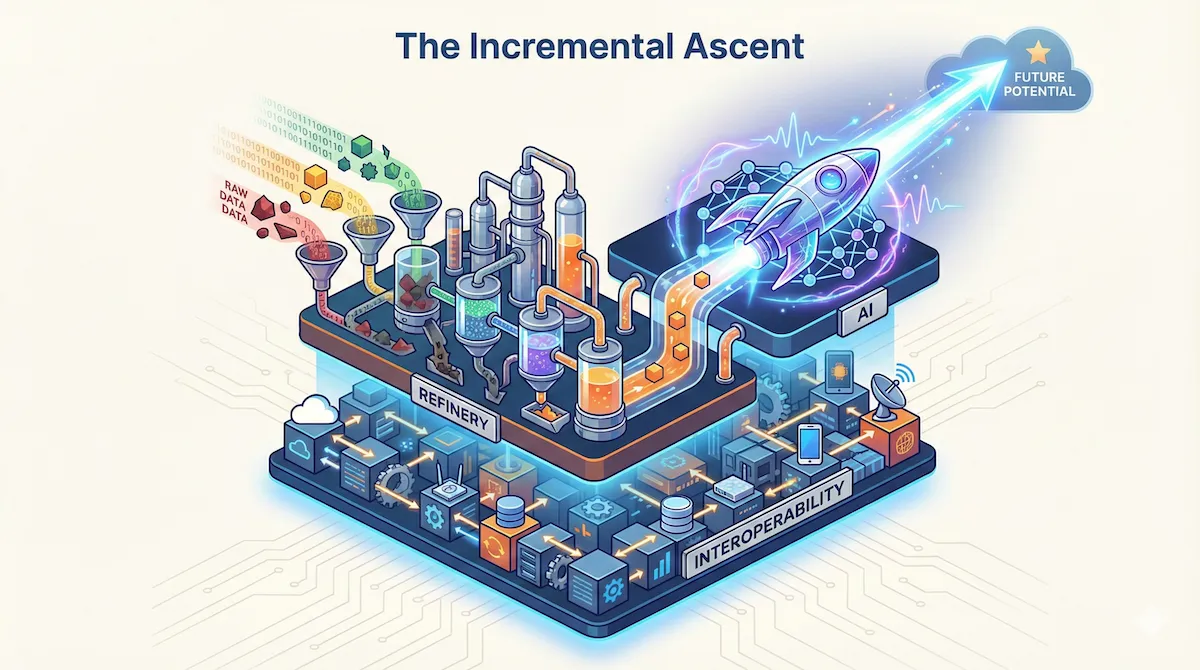
Dec 2025
The EHS AI Launchpad: Escaping Pilot Purgatory
Most EHS AI projects stall after the proof of concept. A framework for moving from a high-value use case to a production system.
Read →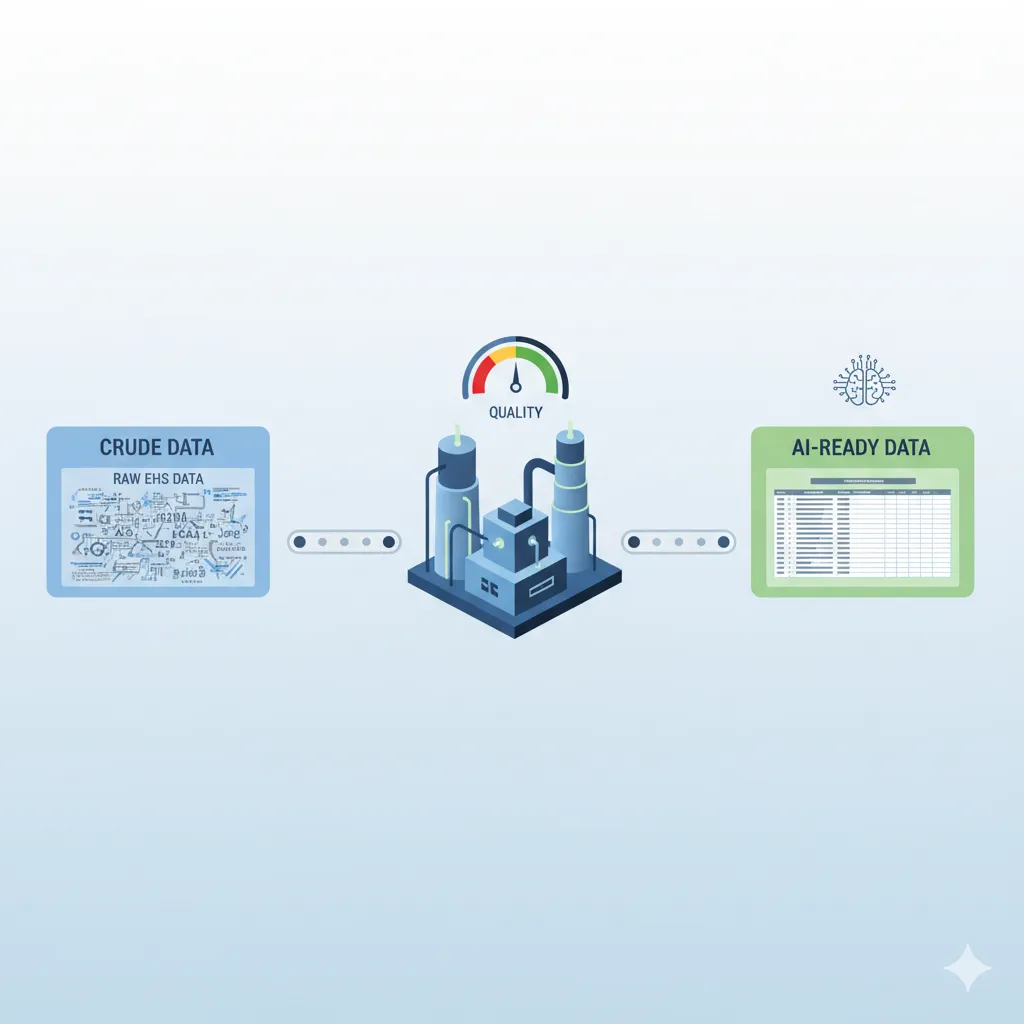
Nov 2025
The EHS Data Refinery: Building AI-Ready Safety Data
Raw EHS data is messy and context-blind. The governance, cleansing, and labeling decisions that transform crude reports into predictive assets.
Read →
Nov 2025
EHS AI Interoperability: Building the Data Foundation
Predictive safety requires signals from EHS, HR, and Maintenance systems together. Why siloed data architecture is the actual blocker—not the algorithm.
Read →
Oct 2025
The AI Readiness Gap: From Hype to High-Value Asset
Misconceptions about AI deployment in enterprise EHS—and why closing the gap between vision and reality requires a data-first starting point.
Read →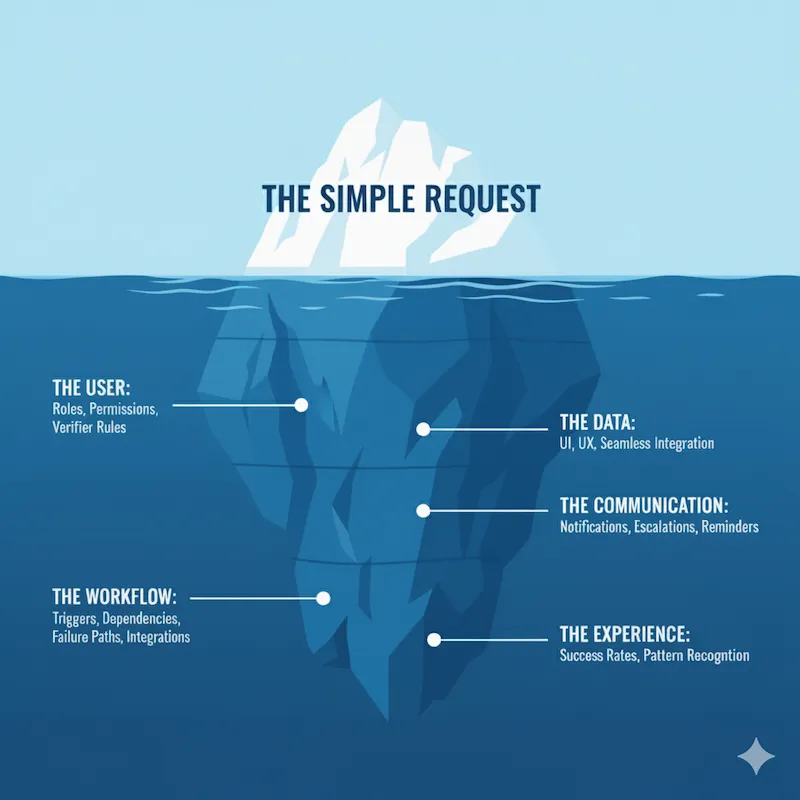
Sep 2025
The Requirements Iceberg
Every EHS software request that looks simple conceals a set of architectural decisions nobody documented. Why the visible part of requirements is never the expensive part.
Read →
Jun 2025
EHS for Enterprises: Strategies for Global Success
Multi-site EHS deployments fail when the architecture is built for one site and scaled by replication. How scalability, ERP integration, and global data governance need to be designed in from the start.
Read →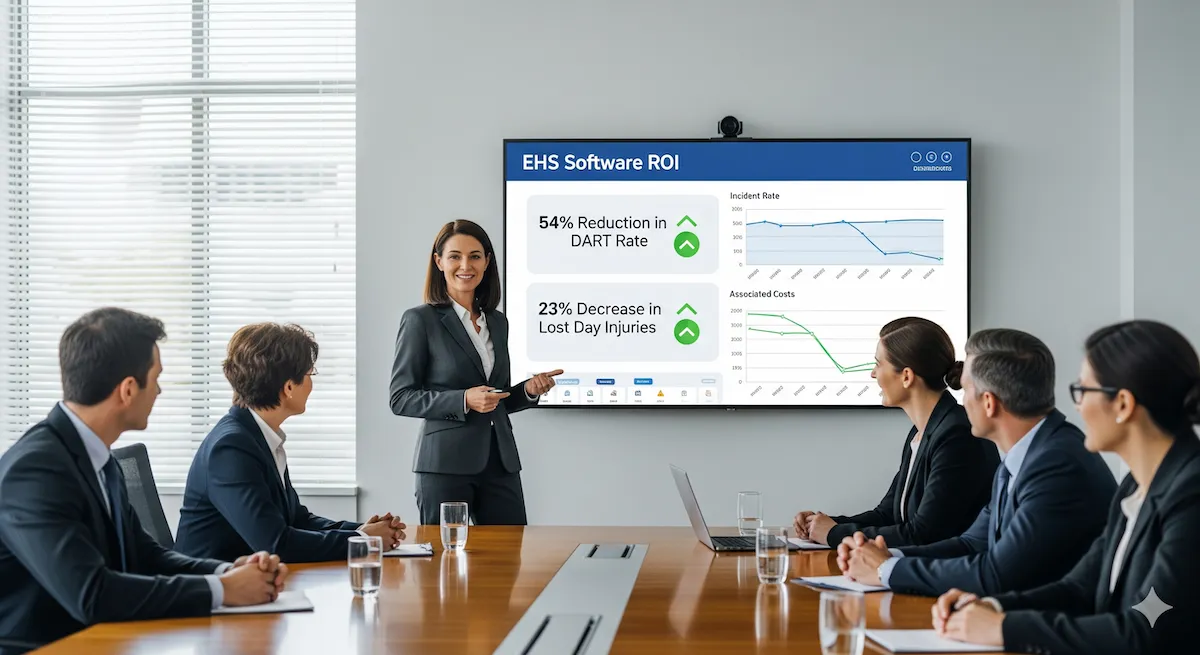
Jun 2025
Measuring Success: Real-World ROI of EHS Software
ROI calculations for EHS software are mostly post-rationalisation. What to actually measure, when to measure it, and why the common mistakes in quantification cause programmes to look like failures.
Read →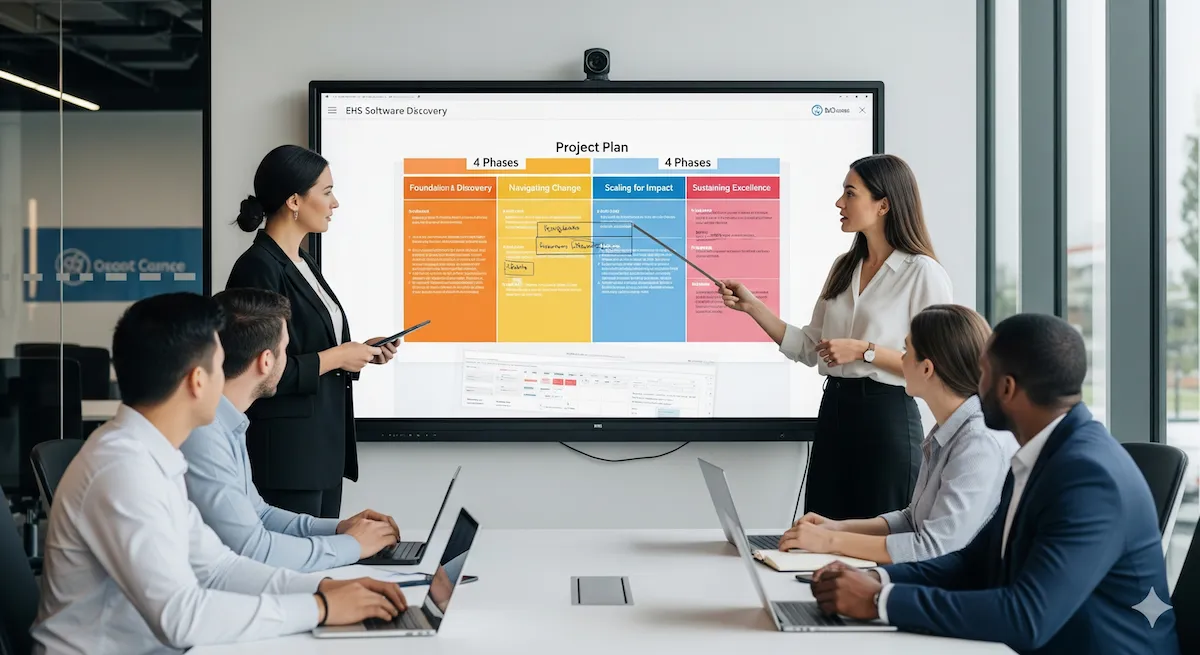
Jun 2025
Strategic Implementation: A Phased Approach to EHS Software Deployment
Phased deployment is not the same as slow deployment. How to sequence needs analysis, vendor selection, change management, and post-launch monitoring so each phase creates conditions for the next.
Read →
Jun 2025
Human Element: Culture and Leadership in EHS Software Success
EHS software adoption fails when the human system isn't designed alongside the technical one. How culture, leadership, and user buy-in determine whether a platform gets used or worked around.
Read →
Jun 2025
EHS Software: More Than a Technological Fix
Buying EHS software is not an EHS strategy. The decisions that matter happen before procurement — and the ones that kill implementations happen the day after go-live.
Read →
May 2025
Getting Trapped While Controlling Hazards
Hazard controls introduce their own failure modes. Error traps — systemic conditions that make mistakes more likely, not less — are often built into the control itself.
Read →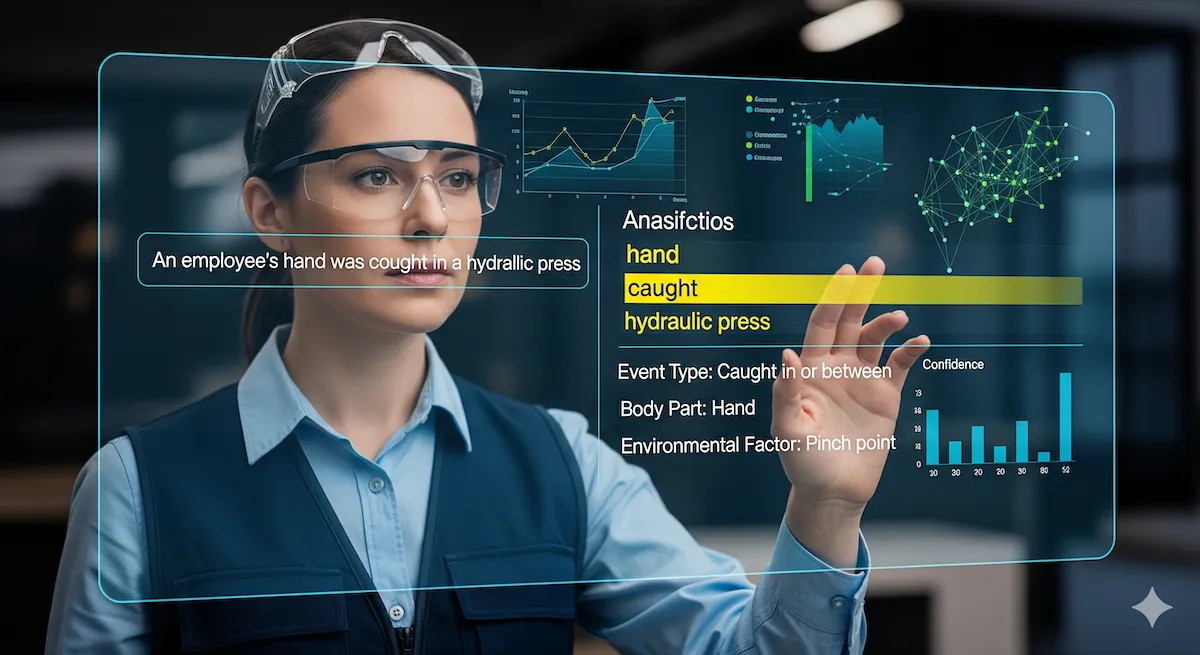
May 2025
How Machine Learning Can Improve Workplace Incident Classification
Manual incident classification is inconsistent and slow. How machine learning models act as a triage system to standardise classification at scale—and why the focus must shift from full automation to data governance.
Read →
May 2025
Diagnostic Analytics: Enhancing Workplace Safety
Recording incidents is not analysis. Diagnostic analytics — identifying patterns, correlations, and root causes across incident data — requires a different data model than most EHS systems are built with.
Read →
May 2025
A Concise Guide to ESAW Methodology for Recording Workplace Accidents
Accurate accident recording is the foundational architecture of an occupational safety system. Learn how the ESAW methodology transforms reporting into a diagnostic tool, and why its granularity is both a strength and a field reality trap.
Read →
May 2025
Analysis and Planning for EHS Software Implementation
The analysis and planning phase is where most implementations win or lose. Needs assessment, objective-setting, and stakeholder alignment done before vendor selection — not after.
Read →
May 2025
Why EHS Software is Infrastructure, Not a Technological Fix
EHS software fails as a compliance tool. It succeeds as data architecture for operational truth. Learn why infrastructure beats technological fixes for EHS.
Read →